DESIGN FURNITURE
FOR STUDENT HOUSING
Below you will see a brief summary of a university project that I carried out with two of my colleagues, in which we designed modular and configurable furniture to adapt to the reduced size of university accommodations (or "student residences") in the city of Bari, Italy.
Below you will see a brief summary of a university project
that I carried out with two of my colleagues,
in which we designed modular and configurable furniture
to adapt to the reduced size of university accommodations
(or "student residences") in the city of Bari, Italy.
INTERIOR DESIGN
FOR STUDENT
HOUSING








CONTACTS
HOME
HISTORICAL RESEARCH
HISTORICAL
RESEARCH
STEP_1
Our project began with the research and study of university
and school residences, tracing their history from their earliest appearances to understand their evolution and structure.
STEP_2
Prior to starting the design, it was essential to analyze and redraw the floor plans of the dormitory in question.
STEP_3
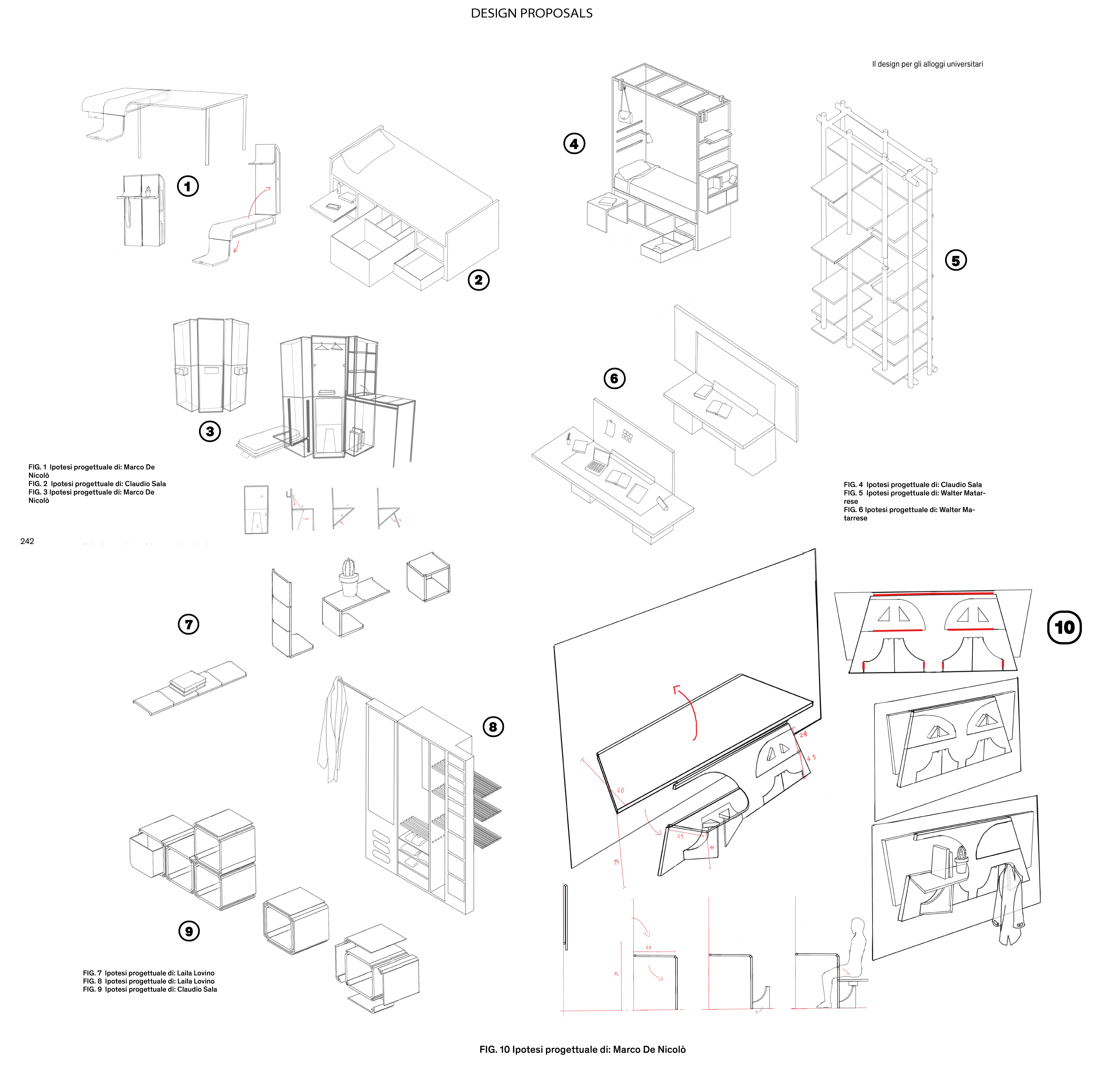
Subsequently, we began designing conceptual modular and multi-functional structures that could better utilize the available space within the rooms and existing structures, including the use of pull-out (or extraction)
and/or rotation mechanisms.
FLOOR PLANS REDESIGN
PRODUCT CONCEPTS
PRODUCT
CONCEPTS
FINAL DESIGN
FINAL DESIGN
STEP_4
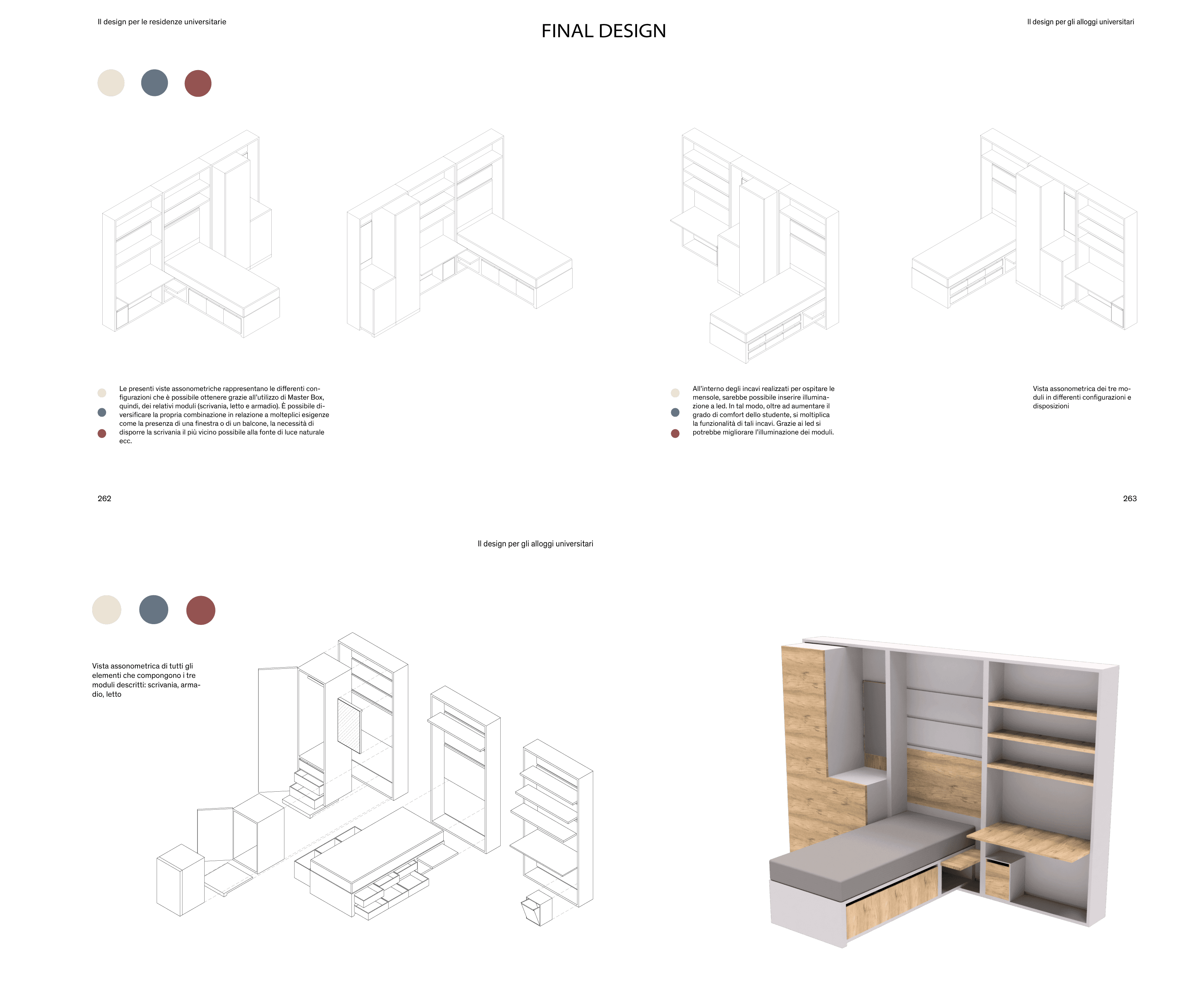
The final product was a design that could adapt to every type of room, featuring modular elements
that allowed for: a desk, wardrobe, chest of drawers, bed, shelves, a compartment for the fridge,
and other personal spaces. This was achieved through the interlocking and sliding of simple wooden boards and structures, placed at different positions and heights according to the students' needs.
We had to interface with the needs, timelines, and budget of the manufacturers and the dormitory, which pushed for simpler and more essential stylistic choices. The other proposals, which were more in line with smarter and visually more refined furniture, were temporarily put on hold.
STEP_4
The final product was a design that could adapt
to every type of room, featuring modular elements
that allowed for: a desk, wardrobe, chest of drawers, bed, shelves,
a compartment for the fridge, and other personal spaces.
This was achieved through the interlocking
and sliding of simple wooden boards and structures,
placed at different positions and heights according
to the students' needs.
We had to interface with the needs, timelines,
and budget of the manufacturers and the dormitory,
which pushed for simpler and more essential stylistic choices.
The other proposals, which were more in line with smarter
and visually more refined furniture, were temporarily put on hold.
RENDER
RENDER



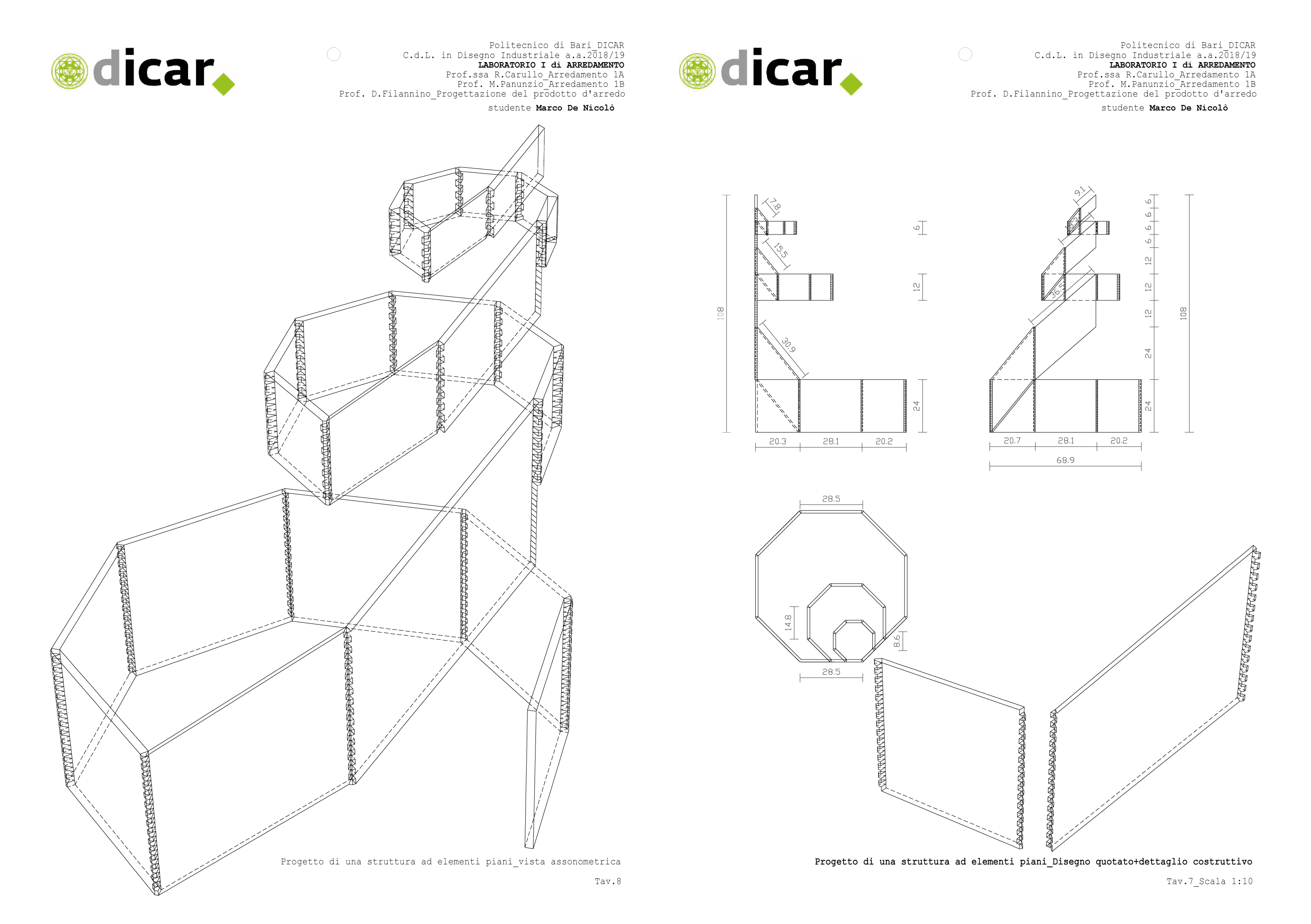
Abstract Structures
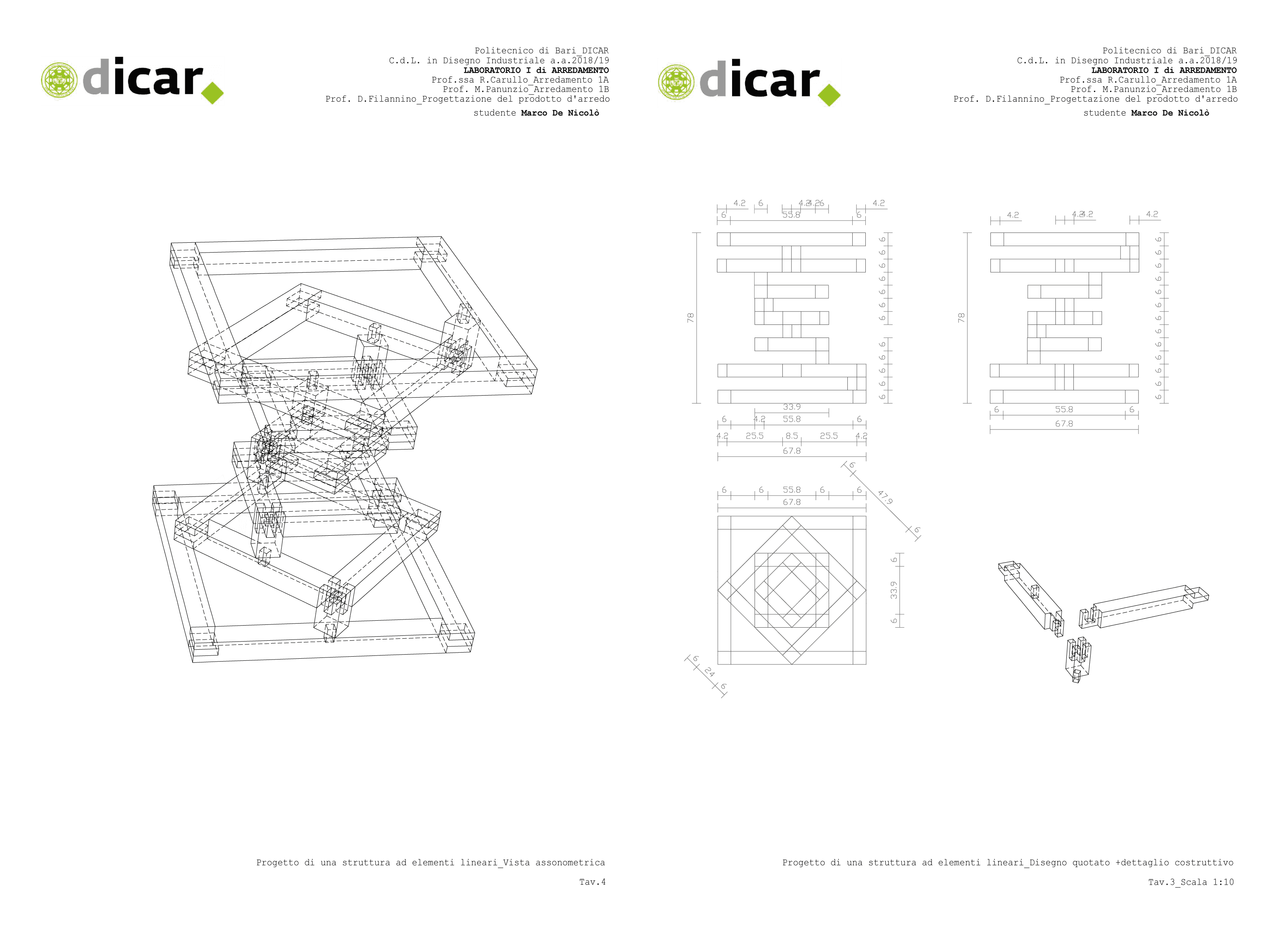
ABSTRACT DESIGN
Below are my first two product design prototypes, which established the start of my path
in product design.
FLOOR PLANS
REDESIGN
STEP_2
Prior to starting the design, it was essential to analyze
and redraw the floor plans of the dormitory in question.
STEP_1
Our project began with the research and study of university
and school residences, tracing their history from their earliest appearances to understand their evolution and structure.
STUDENTS
Marco De Nicolò - Laila Lovino - Claudio Sala
walter mazarese
STUDENTS
Marco De Nicolò - Laila Lovino - Claudio Sala - Walter Mattarrese
ABSTRACT
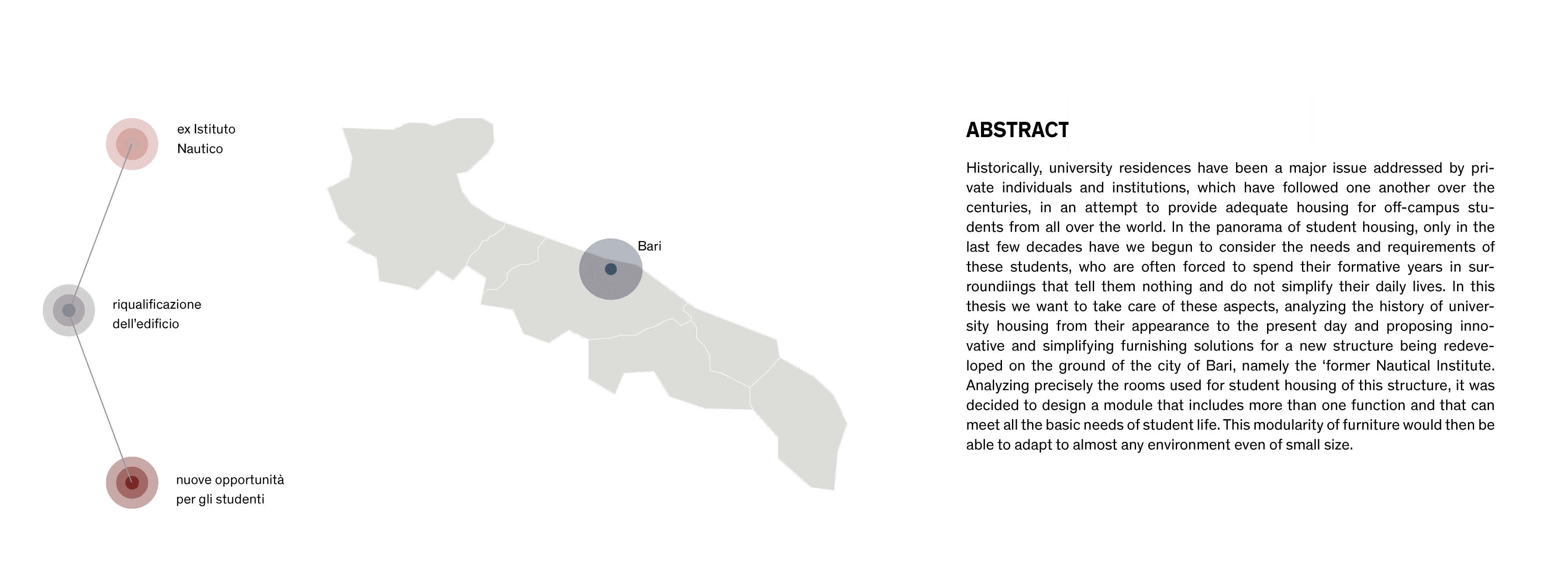
Historically, providing adequate housing for off-campus students
has been a major challenge addressed by private and institutional
efforts over the centuries. Within the student housing landscape,
only in recent decades has attention shifted to the actual needs
of these students, who often spend their formative years
in environments that lack identity and complexity
their daily routines.
This thesis addresses these issues by analyzing the history
of university housing from its origins to the present day.
We then propose innovative and simplified furnishing solutions
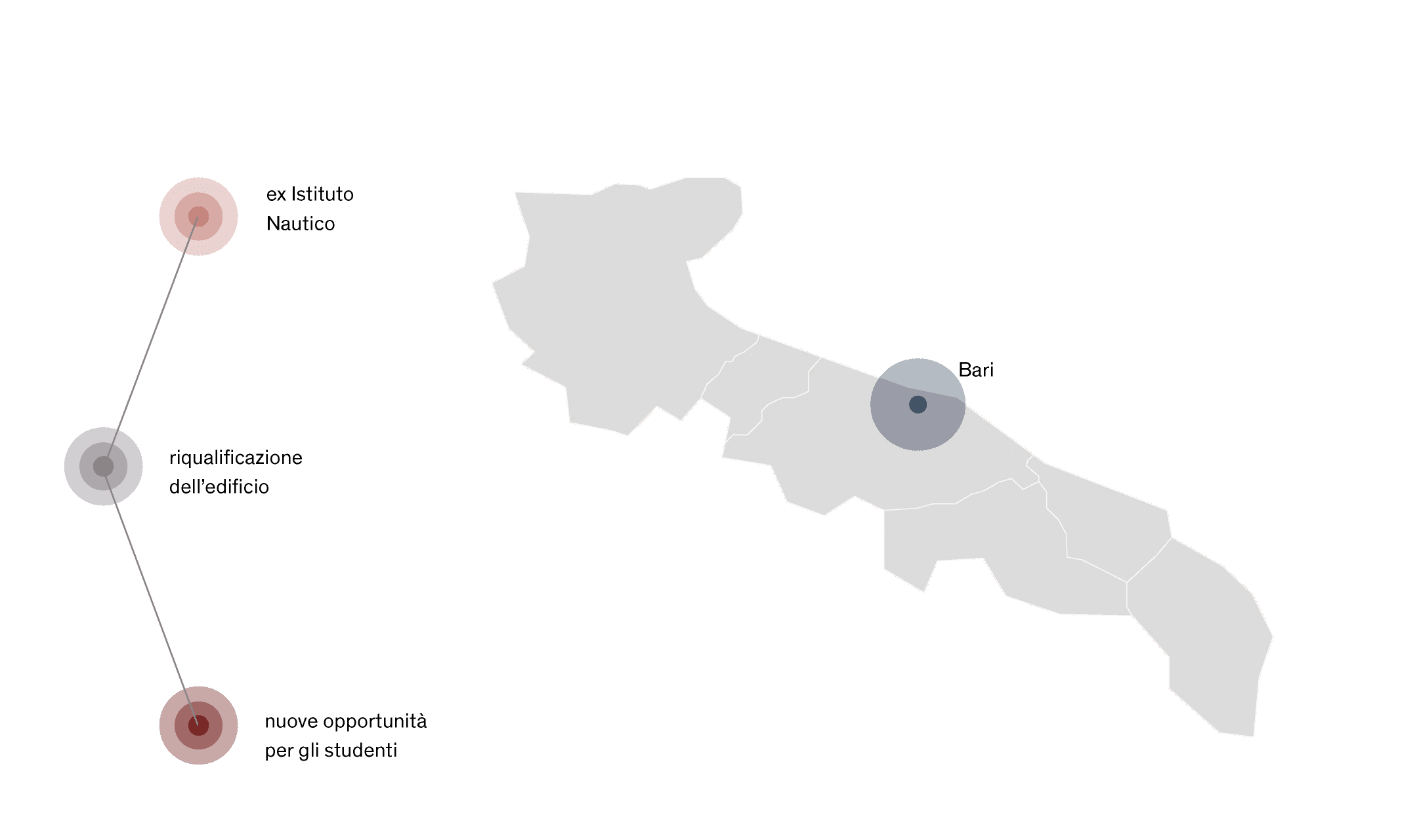
for a new structure currently being redeveloped in Bari
the former Nautical Institute. Focusing specifically on the student accommodation units within this building, we designed
a multi-functional, modular furniture system.
This module integrates several functions to meet all the basic requirements of student life. The resulting furniture modularity
can readily adapt to various small-sized environments,
ensuring efficiency and user comfort.
STEP_3
Subsequently, we began designing conceptual modular
and multi-functional structures that could better utilize
the available space within the rooms and existing structures, including the use of pull-out (or extraction)
and/or rotation mechanisms.
ABSTRACT
DESIGN
Below are my first two product design prototypes,
which established the start of my path
in product design.
Abstract Structures

HOME
CONTACTS